
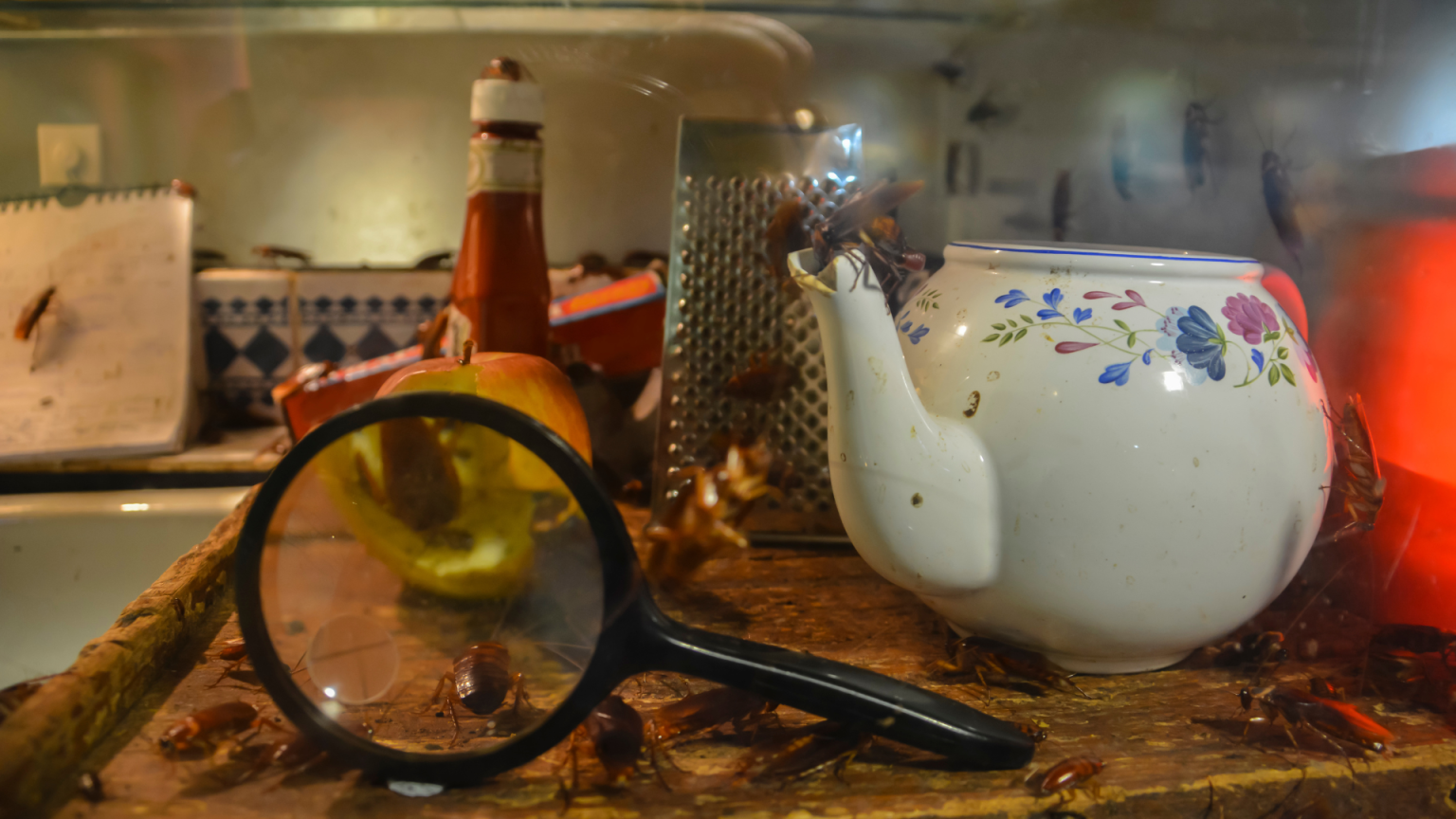
If you’re seeing cockroaches in your home, don’t jump straight to blaming yourself. One of the biggest myths out there is that roaches only show up in “dirty” houses. That’s just not true. Cockroaches are built to survive, and they move in anywhere they can find the basics: food, water, warmth, and a safe place to hide. A clean home can still offer all of that without you realizing it.
A lot of the time, roaches are closer than you think long before you spot one. They can hang out in wall voids, shared plumbing lines, attics, crawl spaces, or even come from a neighboring unit, then pop out when conditions are right. Once they get comfortable, they multiply fast. That’s why seeing cockroach nymphs matters. It usually means the problem has been building quietly for a while.
The good news is this: when you understand what’s drawing them in, you can fix the right things and stop the cycle for good.
Roaches Follow Food
Cockroaches aren’t picky eaters. They don’t need open trash or dirty kitchens to survive. Small crumbs under appliances, grease residue on stovetops, pet food bowls left out overnight, cardboard packaging, or even glue from paper products can be enough to sustain them.
In real homes, the most common food sources we find aren’t obvious. Crumbs fall behind refrigerators. Grease builds up under burners. Pet food gets nudged under cabinets. Trash cans are lined but not sealed. These small, everyday situations are more than enough for roaches to thrive.
Once cockroaches locate a steady food source, they leave scent trails behind that attract others. This is how a minor issue can quietly turn into a larger one. Cockroach traps may catch a few adults, but they don’t remove the hidden food sources or stop the attraction cycle that keeps pulling more roaches in.
How to Fix It
Start by taking away the “easy wins” roaches live on, especially the stuff you don’t see every day like crumbs under appliances and grease around the stove. If you’re still finding activity after tightening up food storage and cleanup, that usually means they’re feeding somewhere hidden and it’s time to track it down properly.
Roaches Follow Water
Water is often the deciding factor in whether cockroaches stay or leave. A home can be spotless, but if there’s moisture, roaches can survive. Leaky pipes under sinks, slow drains, condensation around AC lines, water heaters, or even consistently humid bathrooms create ideal conditions.
Kitchens and bathrooms are the most common problem areas because they combine food, water, and warmth. We regularly find cockroach activity behind dishwashers, under sinks, inside cabinet voids, and around plumbing penetrations where moisture collects out of sight.
Cockroach nymphs are especially dependent on nearby water sources. If you’re seeing smaller roaches, it usually means there’s a hidden moisture issue supporting active breeding. Fixing visible leaks helps, but many moisture sources are hidden inside walls or under flooring, which is why infestations often persist despite homeowner efforts.
How to Fix It
Roaches can handle a lot, but they won’t stick around long without moisture, so even a small leak or constant humidity can keep them going. Fix what you can quickly, but if you’re still seeing cockroach nymphs, there’s often a water source you can’t see that needs a professional eye.
Roaches Get In Through Entry Points And Gaps
Cockroaches don’t need an open door to get inside. Small cracks in the foundation, gaps around doors and windows, unsealed utility lines, vents, and drain pipes are all common entry points. In apartments or townhomes, they can easily move between units through shared walls and plumbing chases.
They also hitch rides. Grocery bags, cardboard boxes, delivery packages, luggage, and even used furniture can bring roaches inside without you ever realizing it. This is especially common with German cockroaches, which prefer indoor environments and reproduce quickly once introduced.
Once inside, they don’t stay in open areas. They move directly toward dark, protected spaces. By the time you see one out in the open, there are usually more hiding nearby.
How to Fix It
Focus on the simple access points first like door gaps, window edges, and openings around pipes under sinks and behind appliances. If they’re coming from shared plumbing lines or wall voids, sealing random cracks won’t solve it by itself and you’ll want a targeted plan.
Roaches Stay Hidden
Cockroaches are experts at staying out of sight. They prefer tight spaces where their bodies touch surfaces above and below, which makes cabinets, wall voids, appliance housings, and cracks ideal hiding spots. They’re also nocturnal, so most activity happens while you’re asleep.
This is why many homeowners only see roaches when the infestation is already established. Cockroach nymphs and adults hide together, often close to food and water. Behind refrigerators, inside stove control panels, under sinks, behind baseboards, and inside bathroom vanities are all common harborage areas.
Finding cockroach traps full of roaches can feel alarming, but it’s also a sign that activity is heavier than what’s visible. Traps help with monitoring, but they don’t address nesting sites, egg cases, or the conditions allowing roaches to survive in the first place.
How to Fix It
Instead of chasing the ones you see, assume the real problem is in the tight, dark spots they prefer and look for patterns around kitchens and bathrooms. Cockroach traps can help confirm where activity is heaviest, but they’re best used to guide treatment, not replace it.
When To Call Eco-Pest Solutions For A Proper Inspection
If you’re seeing cockroaches repeatedly, finding cockroach nymphs, or relying on traps and sprays without long-term results, it’s time for a professional inspection. Cockroach problems are rarely solved by treating only what you can see.
At Eco-Pest Solutions, inspections focus on identifying why roaches are present, and not just killing visible insects. That means locating hidden entry points, moisture issues, nesting areas, and food sources that allow infestations to continue.
Professional treatment goes beyond surface sprays. It:
-
- Targets the full life cycle (including cockroach nymphs)
-
- Treats hidden harborage areas, not just surfaces
-
- Uses targeted placement and monitoring (cockroach traps)
If you’re unsure where the roaches are coming from or why they won’t go away, a proper inspection can give you clear answers and a plan that actually works. Call Eco-Pest Solutions today at 863-318-7378.